What the Law Can’t Erase – The Humanity of the Unborn
Those of us on the side of life and with a particular focus for the unborn understand as well as any that the debate around what is right, moral and just is not always the same as that which is legal, enforceable and promoted. It’s often not long into such a debate when someone will say “you can’t legislate morality”. I happen to disagree with this, fundamentally. I think we do this all the time, it’s the whole basis of law in what was a Christian Society. When people say this I think it’s often a way to justify a position of relative morality, because taking firm moral positions may appear to contravene our current social conventions of tolerance of all and judgement of none. This is not to say that we shouldn’t be tolerant of others and their views, or that we should stand in constant judgement of our fellows. Nobody wants to live like that and if everyone did, we’d all be very lonely.
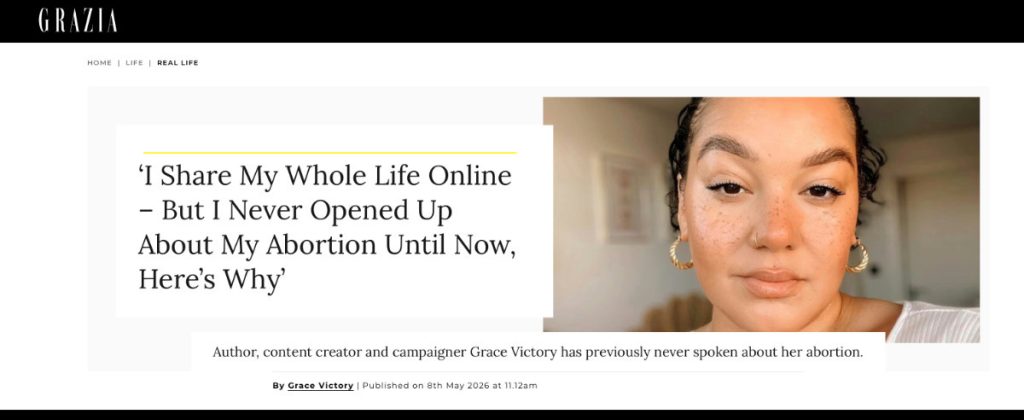
Abortion at any stage was decriminalised recently in the UK, much to the horror of those on the side of life, and to the delight of the pro-abortion lobby. The campaign prompted plenty of discussion and activism on both sides and now it has passed an article in GRAZIA caught my eye. A woman called Grace Victory has spoken out because of this change in the law and feels emboldened to discuss her own abortion in public because until now she was afraid of judgement. Grace says she already receives judgement from the public because she has a significant online presence with hundreds of thousands of followers, and openly discusses her medical and mental issues with them. It’s interesting that Grace felt she could not discuss this “medical” issue at the time. Perhaps, choosing to end the life of your child for the very real and very valid fears and worries about your own capabilities is not a medical choice at all, but goes beyond the physical and mental planes of our existence into the deeper and most real part of us, the unseen place where mothers and their unborn children connect forever.
Grace speaks about the pro-life presence outside the clinic which she had to endure seeing, and found awkward before feeling safe and cared for during the process, which she describes as “horrific”. The controversial “buffer zones” around UK abortion clinics are designed so that anyone wanting to offer love, support and hope to mothers, fathers and unborn children on the edge of forever, cannot, by the force of law. That right, moral and just law we spoke about earlier. The other side of this law is also that these people heading into the clinics cannot be confronted by anything that may affect their choice to that point. These off-ramps for these huge decisions with lifelong effects are deemed to be unlawful. I have heard many stories of children and mothers being saved from the abortion mills, specifically because someone was peacefully outside in hope, prayer and with love for two strangers.
While Grace felt safe and cared for, her child most definitely did not. It did not have to endure seeing people wishing for its welfare, and it didn’t get to feel awkward, and it never will. These decisions are forever; we cannot bring the dead back to life even as we get ever more efficient at destroying life.
Grace says her abortion was obtained legally and the child was nine weeks old, so the abortion would have been unaffected by recent legal changes, and one could argue, irrelevant to the law changes she is celebrating. Grace hopes the legal changes decreases illegal abortions and that women pardoned for historic offences will feel less shame. The language Grace uses is classic pro-abortion language, the child is not spoken of apart from in the hypothetical, despite the fact it’s already real. It’s “ending a pregnancy” and not ending a child’s life, or it’s “women’s health” and not the rights of another unborn human. Grace uses actual issues of women’s health in the same article to make the point that abortion is treated like a dirty secret and presumably it should be celebrated more? As abortion is not healthcare, mixing it in with actual conditions like endometriosis is not helpful. The issues of shame, or regret (which Grace does not have) are not medical terms.
This law, such as it is, means children can be killed at any point up to birth with no legal ramifications. Grace’s abortion would be unaffected by the change and it seems to me a little like the pardons being offered (not to her) is something she would like. If the morality of her decision is based on what the law offers then it’s natural that any justifications might also come from there, but as this is an issue that is far deeper than the law of the land it might be that such pardons, peace and healing are to be found in places like Rachel’s Vineyard, there are plenty of testimonies of just that. I wish her well.
Daniel
March for Life UK Content Creator
- What the Law Can’t Erase – The Humanity of the Unborn
 Those of us on the side of life and with a particular focus for the unborn understand as well as any that the debate around what is right, moral and just is not always the same as that… Read more: What the Law Can’t Erase – The Humanity of the Unborn
 - What the Law Can’t Erase – The Humanity of the UnbornThose of us on the side of life and with a particular focus for the unborn understand as well as any that the debate around what is right, moral and just is not always the same as that… Read more: What the Law Can’t Erase – The Humanity of the Unborn
- The Story Behind the Story: The BBC’s Anti-American Agenda
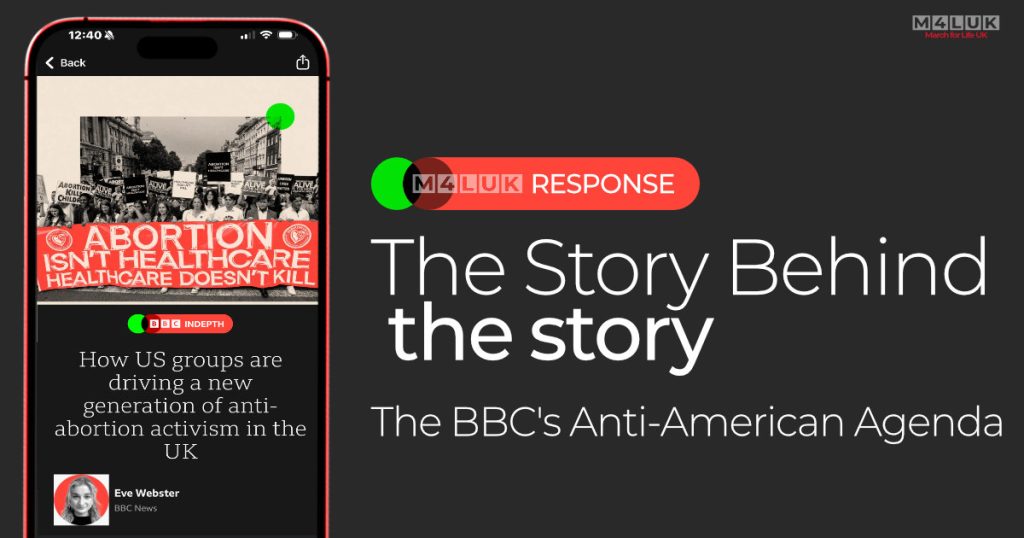 Having read today’s BBC article written by Eve Webster titled ‘How US groups are driving a new generation of anti-abortion activism in the UK’ I feel compelled to share something of the ‘behind the scenes’ story . .… Read more: The Story Behind the Story: The BBC’s Anti-American Agenda